Jezebel
Jezebel is certainly not one of the most admired women in the Bible. She is remembered as a powerful queen who promoted the worship of Baal and opposed the prophets of God. Her story is one of power, idolatry, injustice, and ultimately judgment.
But who was Jezebel in the Bible? Why did she become such a notorious figure, and what can we learn from her story? And what good does the Jewish interpretation see in Jezebel, even though her life was marked by serious wrongdoing?

Jezebel in the Bible: A Summary
Who: Jezebel (Hebrew name is אִיזֶבֶל (’îzævæl))
A Phoenician princess, the daughter of Ethbaal, king of the SidoniansWhat: Became wife of Ahab, king of Israel. As a devoted worshiper of Baal, she promoted his worship in Israel and persecuted the prophets of the Lord
Where: Her story appears primarily in the Old Testament books of 1 Kings and 2 Kings, particularly in 1 Kings 16–21 and 2 Kings 9
When: Ninth century BC, when the kingdoms of Israel and Judah were navigating political alliances and religious tensions



Ahab and Jezebel
The marriage between Ahab and Jezebel was more than a royal romance. It was a political alliance that connected Israel with Phoenicia and brought Jezebel's religious traditions into the royal household of Israel.
A devoted supporter of Baal worship, Jezebel promoted the worship of a deity associated with rain, storms, and fertility. This directly conflicted with Israel's calling to worship the Lord alone.
In 1 Kings 16:31–33, Ahab is condemned for marrying Jezebel and establishing a temple and altar to Baal in Samaria. The biblical narrative presents their actions as a turning point in Israel's spiritual decline, making Jezebel one of its most prominent figures.
To understand her story, however, it's important to recognize the theological perspective of the biblical authors, who interpret these events through Israel's covenant relationship with God.
Jezebel Queen: Power, Influence, and the Worship of Baal
As queen, Jezebel held considerable influence over Israel's religious and political life. She supported Baal worship and maintained relationships with his prophets. According to 1 Kings 18:4, she even ordered the killing of the Lord's prophets, while Obadiah secretly protected a hundred of them.
Jezebel used the resources of the royal household to support her religious commitments. The biblical account portrays her actions as a direct threat to Israel's covenant with God.
Her story is also an example of toxic leadership: influence as a tool for control and oppression.
Elijah and Jezebel
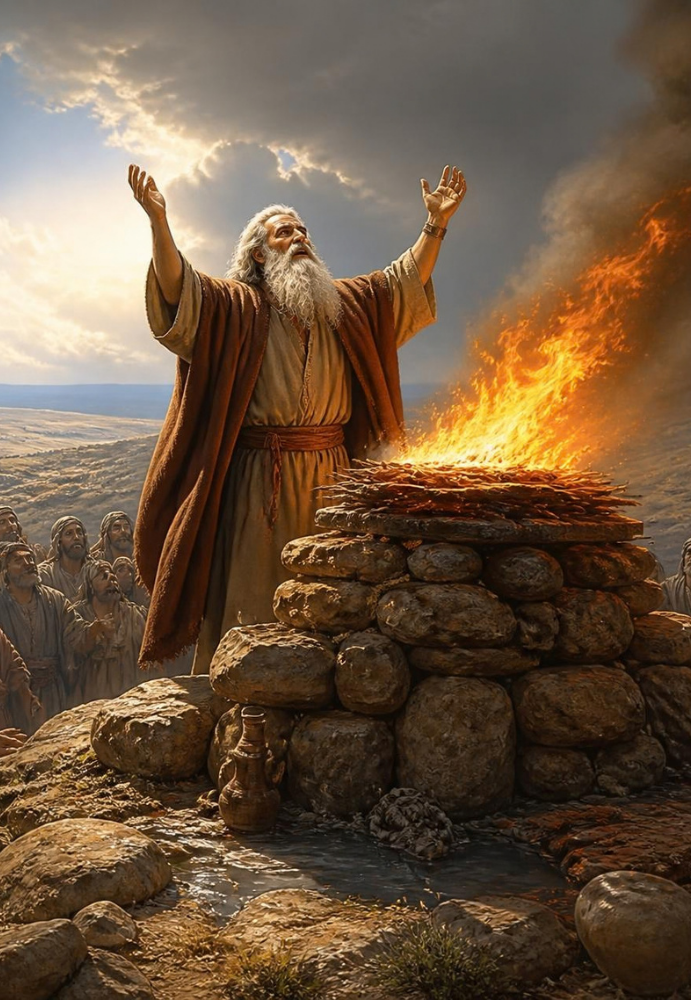
Elijah was a prophet who challenged Israel's worship of Baal under Jezebels influence. During a severe drought, he announced that there would be no rain except at his word.
On Mount Carmel Elijah challenged the prophets of Baal to a public contest. Two altars were prepared, and each side called upon its god to send fire. The prophets of Baal prayed, danced, and cried out for hours. Nothing happened.
Then Elijah prepared an altar to the Lord and soaked it with water. He prayed, asking God to reveal Himself to the people. Fire fell from heaven and consumed the sacrifice, the wood, the stones, and the water. The people fell facedown and declared that the Lord was God. Soon afterward, rain returned to the land.
Why Did Jezebel Want to Kill Elijah?
When Jezebel heard what had happened on Mount Carmel, she sent Elijah a threatening message. Jezebel vowed to have him killed within a day. Elijah, despite his recent victory, became afraid and fled into the wilderness.
Desperately he asked God to take his life. He was exhausted, discouraged, and overwhelmed. But God responded by sending an angel who provided food and water. Elijah rested before beginning a journey to Mount Horeb. There, he encountered God in a powerful and unexpected way.
Courage does not mean the absence of fear. Even deeply faithful people can experience exhaustion and despair.

Jezebels destructive leadership
One of the clearest examples of Ahab and Jezebel's shared abuse of power is the story of Naboth's vineyard in 1 Kings 21.
On day, Ahab wants the vineyard of a man named Naboth, because it lies next to his palace. Naboth refuses to sell it, because the land is part of his family's inheritance. Queen Jezebel is convinced that a king should be able to take whatever he wants, and she promises to get the vineyard for him. She arranges false witnesses to accuse Naboth, and makes sure he is sentenced to death. Once Naboth is dead, Ahab takes the vineyard for himself.
Ahab is no innocent bystander to Jezebel's schemes. He gladly profits from the injustice. The prophet Elijah confronts him with God's judgment on the royal household. He exposes the wrong behind the king's actions and announces what their choices will cost them. Surprisingly, Ahab responds with humility. He tears his clothes, fasts, and humbles himself before God. God takes notice and delays part of the judgment. Jezebel, however, shows no sign of repentance.
The Death of Jezebel (2 Kings 9)
Jezebel's story ends during the rise of Jehu, a military commander who was anointed king and tasked with bringing down Ahab's dynasty.
When Jehu arrived in Jezreel, Jezebel prepared herself and looked out from a palace window. She called out to him, comparing him to Zimri, another military leader who had seized power. Jehu then called for anyone inside the palace who supported him.
Two or three eunuchs appeared at the window. At his command, they threw Jezebel down. She died, and her body was later partly consumed by dogs. Her death fulfilled the prophecy Elijah had delivered earlier.
The scene is violent and difficult to read through a modern lens. It reflects the brutal realities of ancient royal politics.

Reflection on the Human Heart
Jezebel is often remembered as the wicked queen who opposed Elijah and promoted Baal worship.
But her story also invites deeper reflection.
What happens when personal desires become more important than the well-being of others? What happens when influence becomes a way to control rather than serve?
The story of Naboth's vineyard provides a clear example. But this kind of entitlement is not limited to ancient monarchies.
It can appear anywhere people use their influence to silence others or secure personal advantage.
Throughout history, Jezebels' name has been used to portray assertive or influential women as dangerous. Her biblical story condemns persecution and murder for your own gain. It should not be turned into a stereotype about women or female leadership.
Jezebel in Revelation
Jezebel's name appears again in Revelation, centuries after her death. In a message to the church in Thyatira, Jesus rebukes the community for tolerating a woman who calls herself a prophetess:
Nevertheless, I have this against you: You tolerate that woman Jezebel, who calls herself a prophet. By her teaching she misleads my servants into sexual immorality and the eating of food sacrificed to idols.
The name Jezebal is widely understood as a symbolic reference to the Old Testament queen. Just as the original Jezebel, the figure in Revelation represents harmful teaching and spiritual compromise. The name functions as a theological allusion.
The passage has been interpreted in different ways throughout Christian history. Sometimes, Jezebel has been used as a label for women who challenge religious authority or take on influential roles. However, Revelation focuses on specific teachings and behaviors within a particular church community. It is not a general condemnation of female leadership.

Jezebel Spirit: Biblical Concept or Modern Interpretation?
The phrase "Jezebel spirit" appears in some modern Christian communities. It is often used to describe manipulation, intimidation, control, or spiritual deception. However, the Bible does not explicitly define a separate spiritual entity called the Jezebel spirit.
The expression is a later interpretation inspired by the Old Testament queen and the symbolic figure in Revelation. Some Christian teachers use it to discuss destructive patterns of behavior. Others describe it in terms of spiritual opposition.
Problems arise when the label is applied carelessly. Calling someone spiritually dangerous simply because they are outspoken or disagree with authority can damage relationships and reinforce harmful stereotypes.
A more grounded approach is to examine observable behavior. Is someone using deception to gain control? Are they abusing their authority? Do they intimidate others or refuse to take responsibility for harm?
These questions are useful regardless of someone's gender or religious position. Jezebel's story offers lessons about power and accountability. It does not justify assigning people an undefined spiritual condition.
What Can We Learn From the Story of Jezebel in the Bible?
Jezebel lived in a very different world, but her story raises questions that remain relevant today.
Influence Is Never Morally Neutral
Influence can be used to encourage, protect, and serve others. It can also become a tool for manipulation and control. Jezebel's story shows how power becomes destructive when it is disconnected from justice and accountability.
Entitlement Can Lead to Destructive Decisions
Ahab's desire for Naboth's vineyard set the stage for a terrible injustice. Rather than accepting Naboth's refusal, Jezebel used her authority to fulfill his desire. The story reminds us that not every desire deserves to be fulfilled.
Spiritual Conviction Requires Humility
Jezebel's commitment to her religious traditions leads to persecution and the suppression of other forms of worship. Her story highlights the difference between conviction and coercion.
Being certain that we are right does not automatically make our actions just.
Frequently Asked Questions About Jezebel
Who was Jezebel in the Bible?
Was Jezebel a real historical queen?
What was Jezebel's relationship with Ahab?
Why did Jezebel oppose Elijah?
How did Jezebel die?
What does Jezebel represent in the Bible?
What does Jezebel in Revelation mean?
What is the Jezebel spirit?
Frequently Asked Questions About Jezebel
Who was Jezebel in the Bible?
Jezebel was a Phoenician princess who married Ahab, king of Israel. She promoted Baal worship, persecuted the Lord's prophets, threatened Elijah, and arranged Naboth's death. Her story appears mainly in 1 Kings and 2 Kings.
Was Jezebel a real historical queen?
The Bible presents Jezebel as a historical queen who lived during the ninth century BC. Her story is set within the political world of ancient Israel and Phoenicia. However, not all details of her life can be independently verified through historical evidence.
What was Jezebel's relationship with Ahab?
Jezebel was Ahab's wife and an influential figure in his reign. Their marriage connected Israel with Phoenicia. The biblical narrative associates both rulers with Baal worship and the abuse of royal authority.
Why did Jezebel oppose Elijah?
Elijah challenged Baal worship and publicly demonstrated the power of the Lord on Mount Carmel. Jezebel supported Baal and viewed Elijah as a threat. After the confrontation, she threatened to have him killed.
How did Jezebel die?
Jehu ordered palace officials to throw Jezebel from a window in Jezreel. She died, and her body was partly consumed by dogs. Her death is presented as the fulfillment of Elijah's earlier prophecy.
What does Jezebel represent in the Bible?
In the Old Testament, Jezebel is associated with idolatry, persecution, injustice, and the misuse of power. In Revelation, her name symbolizes harmful teaching and spiritual compromise.
What does Jezebel in Revelation mean?
In Revelation 2:20, Jezebel is the name given to a woman in the church of Thyatira who is accused of misleading believers. Her name likely alludes to the Old Testament queen and her association with religious compromise.
What is the Jezebel spirit?
The Jezebel spirit is a modern Christian expression used to describe manipulation, control, intimidation, or spiritual deception. It is not explicitly defined as a separate spiritual entity in Scripture. The term should be used cautiously to avoid stigmatizing people or reinforcing gender stereotypes.